How Proper Sanitizing Keeps Germs Under Control and Protects Your Home
Disinfection plays a key part in keeping your bathroom safe and healthy. It kills harmful germs that regular wiping and rinsing can miss. During bathroom cleaning, simply removing dirt is not enough. You also need to disinfect high-touch areas like toilets, sinks, and faucets. When done right, disinfection lowers the spread of bacteria and viruses inside your home.
Why Prevention Matters
Your bathroom is one of the most used rooms in your home. It is warm and often damp. Germs grow fast in these conditions. Without regular disinfection, bacteria can stay on surfaces for days. That means every flush, faucet turn, or light switch touch can spread germs.
Good habits stop problems before they start. Routine bathroom cleaning with proper disinfecting products keeps surfaces safer. It also helps control odors and stops mold from forming in grout and corners.
Early Warning Signs of Poor Disinfection
If you are not disinfecting well enough, you may notice:
- Strong odors that return quickly after cleaning
- Sticky or dull surfaces on counters
- Mold spots in tile grout or along caulk lines
- Frequent illness spreading among family members
- Soap scum building up on glass doors
These signs show that dirt is being removed, but germs are not fully treated. A basic wipe-down will not solve the issue if bacteria remain behind.
Simple Routine Checklist for a Healthier Bathroom
Staying on schedule makes a big difference. Here is a simple plan you can follow:
- Wipe and disinfect toilet seats and handles at least twice a week.
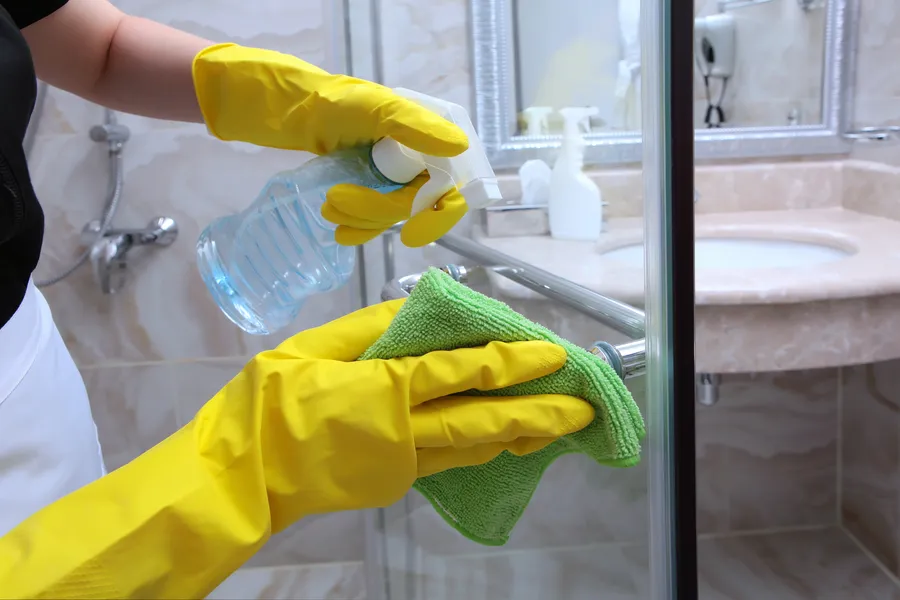
- Spray and disinfect sink faucets and counter surfaces weekly.
- Clean and disinfect shower walls and doors every week.
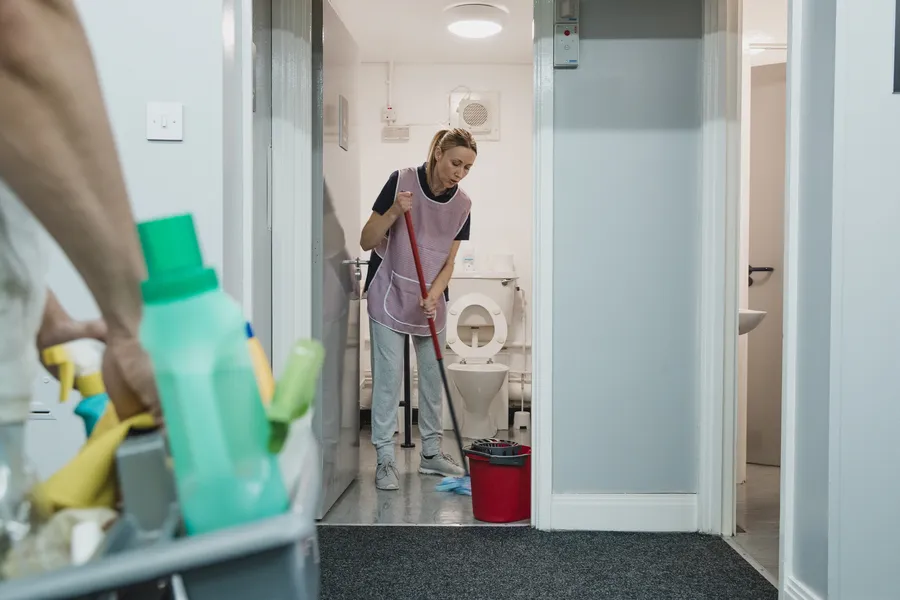
- Mop floors with a disinfecting solution once a week.
- Wash bath mats in hot water every one to two weeks.
Always read product labels and allow the disinfectant to sit on the surface for the full contact time. If you wipe it off too soon, it may not kill the germs.
Best Practices for Long-Term Results
Start with a clean surface before disinfecting. Dirt and soap scum can block disinfectants from working well. During bathroom cleaning, scrub away visible grime first. Then apply your disinfectant evenly.
Use separate cloths for toilets and sinks. This lowers the chance of spreading bacteria from one area to another. Replace sponges often. Old sponges hold germs even after rinsing.
Ventilation also matters. Run a fan or open a window after showers. Lower moisture levels help stop mold and mildew growth. Keeping surfaces dry between uses makes your disinfecting work last longer.
What Not to Do
Avoid mixing cleaning products. Some chemical mixes can create harmful fumes. Do not rely only on scented sprays. A fresh smell does not mean the surface is disinfected.
Do not skip high-touch spots. Light switches, door handles, and cabinet pulls collect germs quickly. These areas are often missed during quick bathroom cleaning sessions.
Also, do not rush. Many disinfectants need several minutes to stay wet on the surface. If you spray and wipe right away, the product does not have time to work.
When to Schedule Professional Help
Some bathrooms need more than routine care. Deep stains, heavy mold, or strong odors may point to deeper problems. Grout that stays dark after scrubbing may need special treatment. In these cases, professional service can help restore a safe and clean space.
A trained expert uses equipment and products designed for deeper sanitation. This level of care can support regular bathroom cleaning and protect your household over time.
Get Reliable Help for a Safer Bathroom
If you live in Ramsey, NJ and want a healthier bathroom, I can help. At Lin's Cleaning Service, I focus on detailed bathroom cleaning and proper disinfection practices that protect your home. I take time to treat high-touch surfaces and hidden moisture spots the right way. Call me at (551) 301-7631 to schedule a visit or ask questions about keeping your bathroom safe.